Rain on a UK track day used to mean a wasted entry fee. These days it means the best-value seat time you will get all year. Wet tarmac slows everything down: lower speeds, gentler impacts, and far more time to feel what the car is doing underneath you. It also exposes every lazy habit — the stab of throttle, the late correction, the tyre pressures you never checked. Get a few fundamentals right and the rain stops being a threat and starts being a coach.
Read the Surface Before You Trust It
Wet grip is not uniform, and that is the whole game. A UK circuit that looks uniformly damp from the pit lane will have three or four genuinely different surfaces around the lap.
Walk or drive the sighting laps with your eyes up. Look for standing water at the exit of slow corners, where the drainage always struggles. Note the drain covers and the painted kerbs and lines, which turn into ice rinks. Check where trees overhang the track — shaded corners stay damp long after the rest of the lap has dried, so you can spend a whole session swapping between a grippy car and a nervous one, corner to corner.
The most useful thing to understand is what rubber does when it gets wet. The racing line, polished by hundreds of dry laps, becomes glassy and slick. Moving off the line onto rougher, more abrasive tarmac often finds more grip than the conventional line. In the wet, the fast way and the grippy way are frequently not the same thing.
Standing water on a straight deserves its own rule: ease off before it, keep a steady throttle through it, and do not brake or steer mid-puddle. If the tyres lift off the surface, the steering and pedals simply stop working until they bite again.
Tyre Pressures and Setup Levers That Actually Help
Pressures are the quickest wet-weather adjustment you have, and they cut both ways.
For genuinely wet, standing-water conditions, many drivers add a few psi over their dry baseline. The firmer sidewall rolls less under load and the smaller contact patch helps the tyre cut through water rather than skate across it. The cost is outright grip, so the car will feel sharper and less planted. If the track is merely damp and greasy rather than properly wet, start close to your dry pressures — tyres run much cooler in the rain and simply will not build the same heat and pressure gain they do in the dry.
Whatever you choose, treat it as a test, not a fixed rule:
- Set pressures cold — before you leave the garage, not after two laps.
- Bleed them back down after each session; wet tyres hold pressure differently to hot dry ones.
- Write down surface condition, pressures, and how the car felt. Three wet days later you will have your own reference sheet, worth more than any internet opinion.
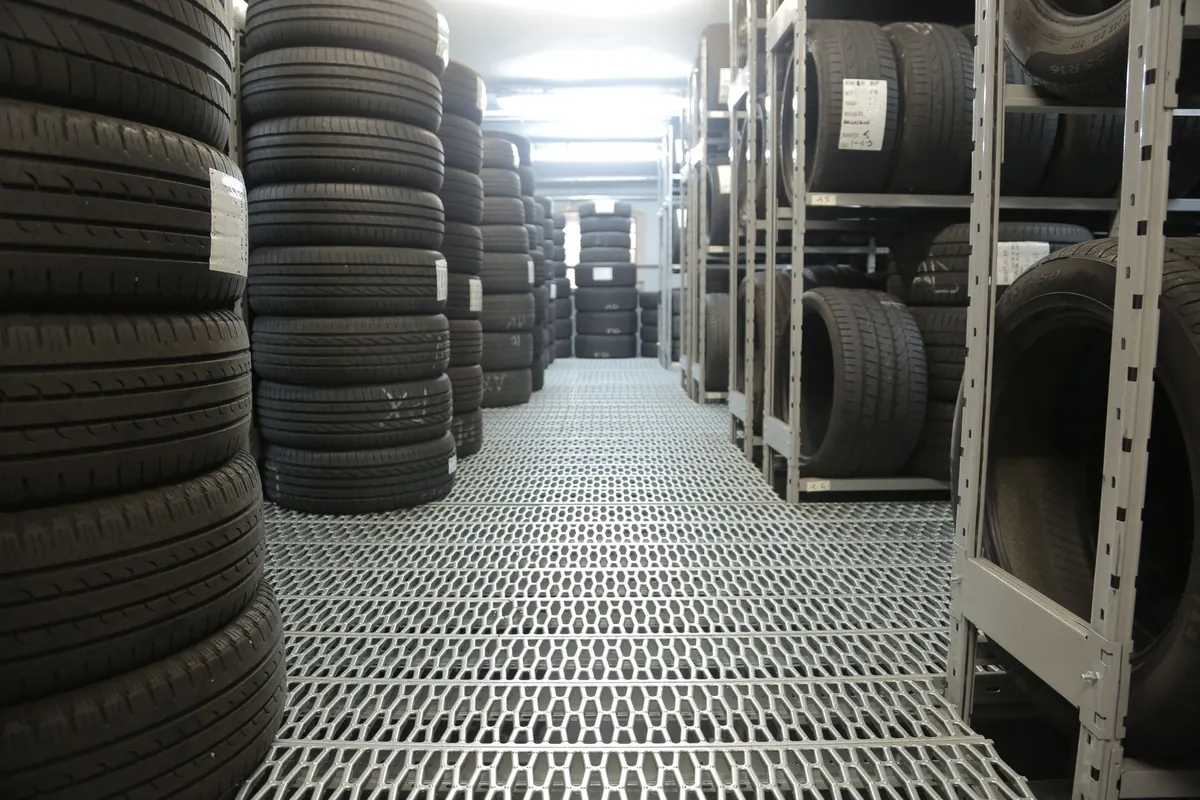
- Tread matters. A cut tyre clears water where a slick simply floats. If you drive to and from the circuit, remember UK law requires a minimum of 1.6mm of tread across the central three-quarters of the tyre.
On the chassis, softer is usually kinder in the wet. Reducing rear damping or rear anti-roll bar stiffness lets the tyre follow an uneven, waterlogged surface instead of skipping over it, which helps you get power down on exit. Change one thing at a time so you know what did what.
Throttle Control: Less, Earlier, Smoother
The wet gives you a longer window to work in. You can get back on the throttle sooner, but with much less of it. That is the whole technique in one sentence.
Initiate with a light lift or a gentle handbrake application at a lower speed than you would use in the dry, then hold a small, constant throttle opening. Your right foot is now doing the job your steering was doing in the dry — it holds the angle rather than forcing it.
The single biggest mistake in the rain is coming off the throttle completely mid-drift. Weight shifts forward, the rear tyres bite abruptly, and the car snaps back the other way while you are still winding off lock. Stay in it. Small, steady, boring throttle inputs are fast throttle inputs.
Steering wants less lock and more patience. The car rotates with less input in the wet, so a big armful of correction usually just starts a pendulum you then have to catch. Squeeze the brakes rather than stabbing them, trail them gently, and treat every lap as new information — the grip you found in one corner may be gone by the next.
Seeing, and Being Seen
Visibility ends more wet sessions than grip does.
Misting is the number one problem. Run the air conditioning to dehumidify the cabin even when it is cold outside, and point the heater at the screen. Clean the inside of the glass properly before the day starts — a greasy film you never noticed in the dry turns into a blinding smear once your breath and wet overalls are in the car.
Outside, fit fresh wiper blades and treat the side windows and mirrors with a water repellent so spray beads and rolls off instead of sitting there. On your helmet, use a clean visor with an anti-fog insert and keep spare tear-offs or a second visor in a dry bag.
Put your lights on. Marshals and other drivers need to see you through the spray. And do not follow closely in the wet — sitting in someone else's rooster tail means you are driving blind into a corner you cannot see. Back off, let the spray settle, and look after your own line.
A Wet Session, Step by Step
- Sighting laps: eyes up, noting standing water, shade, paint and kerbs.
- Three laps at seven-tenths. No handbrake, no heroics — just feel where the grip is.
- Add throttle-only changes of direction at small angles, working out how much pedal it takes to rotate the car.
- Introduce handbrake initiation, well below your dry speed.
- Link two corners, then a full lap, accepting that a scrappy lap completed is better than a tidy one abandoned.
- Come in every few laps. Check pressures, clear the screen, drink something, and think about what the car told you.
What to Change, and What to Dry
If your ECU or throttle map is adjustable, a softer, more progressive pedal map is worth its weight in the rain — it turns one millimetre of foot movement into a gentler request at the throttle body. Beyond that, rain tyres or good tread, sensible pressures, and a softer rear end will cover most of it.
At the end of the day, dry the car properly. Water sits in footwells, around wiring and in the boot of a stripped-out car, and a damp interior over a British winter does real damage to connectors and switches. Mop it out, leave the car ventilated, and sort any leaks before the next event rather than the morning of it.
The Wet Is the Cheapest Coaching You Will Get
Do not avoid wet entries. Take one deliberately. You will learn more about throttle discipline and weight transfer in a single damp afternoon than in a fortnight of dry track days, because the car talks to you at a volume you can actually hear.
Start slow, keep the inputs small, and look after your vision. Do those three things and rain stops being the day you write off — it becomes the day you get faster.
Photo: 24x36mm / Pixabay